admin
admin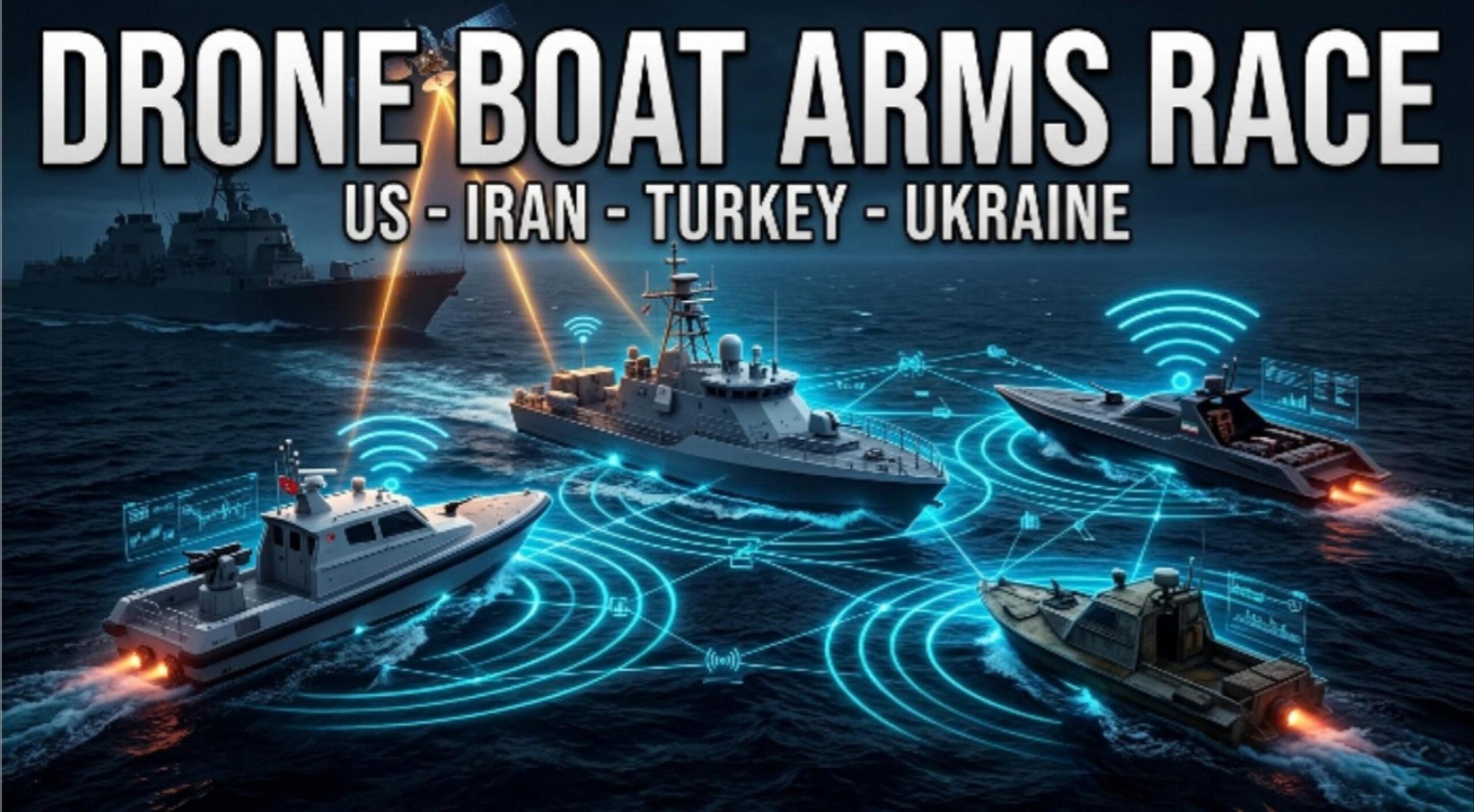
A silent arms race is accelerating across the world’s most critical chokepoints. From the volatile waters of the Persian Gulf to the active combat zones of the Black Sea, the centuries-old doctrine of naval supremacy is undergoing its most radical transformation since the introduction of the aircraft carrier.
The future of maritime power is no longer defined by the sheer tonnage of steel warships, but by the intelligence of the unmanned networks that hunt beneath and above the waves.
The Pentagon’s ‘Digital Ocean’
In the strategic waters of the Persian Gulf, the U.S. Navy’s Task Force 59 has quietly transitioned from a experimental unit into the vanguard of modern naval doctrine. Operating for over two years, the task force is successfully building what defense officials call a “Digital Ocean”—an omnipresent, AI-driven mesh network of unmanned surface vessels (USVs), subsurface drones, and advanced sensors.
“If a ship moves, they know. If a drone flies, they see it,” defense analysts note.
This is not merely enhanced surveillance. The U.S. military has begun integrating lethal capabilities into these autonomous platforms, testing USVs capable of launching precision missiles. For Washington, the strategic calculus is clear: maximize situational awareness, minimize human risk, and project power through algorithmic precision.
Asymmetric Defiance: Iran’s Low-Cost Lockdown
However, the West does not hold a monopoly on this technology. Directly challenging U.S. hegemony in the Middle East, Iran has deployed its own doctrine of unmanned sea power.
Recognizing the futility of matching the U.S. Navy hull-for-hull, Tehran has embraced asymmetric warfare. Utilizing a swarm network of:
- Fast attack craft
- Kamikaze drones
- Low-cost unmanned surface vessels
Hidden within underground tunnels and fortified coastal bases along the Persian Gulf, Iran’s objective is economic and logistical denial. By drastically lowering the financial cost of autonomous systems, Tehran aims to elevate the risk of conventional naval operations to a level where any potential conflict becomes prohibitively expensive for foreign powers.
[Conventional Warship] <--- High Cost / High Risk
       VS.
[Autonomous Swarm Network] <--- Low Cost / High Lethality
Turkey’s Autonomous Ecosystem Erupts
Concurrently, Turkey has emerged as a formidable, self-reliant powerhouse in the naval drone race. Shifting from a buyer to a major global exporter of defense tech, Ankara is constructing a comprehensive ecosystem of unmanned surface and underwater vehicles.
Central to this strategy is the ULAQ, Turkey’s first combat unmanned surface vessel (AUSV). Alongside domestic platforms like Salvo, MİDLİA, and Albatros, the ULAQ allows the Turkish Armed Forces to execute high-risk reconnaissance and strike missions across the Mediterranean and Aegean seas without risking a single sailor. Recent joint exercises demonstrate that Turkey is no longer just testing individual platforms—it is deploying integrated, multi-domain drone networks.
From Lab to Lethal: The Black Sea Litmus Test
While global powers refine their doctrines, Ukraine has provided the ultimate proof of concept in real-world combat. Facing the formidable Russian Black Sea Fleet, Kyiv’s deployment of the “Sea Baby” and related maritime drones has permanently altered modern naval tactics.
- Disruption: Cheap, explosive-laden Ukrainian USVs have successfully crippled multi-million-dollar warships.
- Denial: Forced a major naval power to retreat from historical strongholds and redesign coastal defenses.
- The Global Lesson: If a nation without a traditional navy can neutralize capital ships using off-the-shelf and bespoke autonomous technology, every maritime nation on Earth must urgently rewrite its coastal defense playbook.
The Geopolitical Shift: Who Rules the Network?
This technological paradigm shift is triggering a massive geopolitical realignment. The defense industry is experiencing an unprecedented gold rush, birth to new alliances, disruptive tech startups, and a total restructuring of national procurement budgets.
The strategic equation has evolved: The nation that masters unmanned sea systems will secure global trade routes, control vital energy corridors, and project undisputed power.
As the United States, China, Turkey, Iran, and Ukraine push the boundaries of autonomous warfare, the ultimate question for global military commands remains: In the conflicts of tomorrow, will victory belong to the nation with the biggest ships, or the one with the smartest network?
© 2026 W News Alert. All rights reserved. This material may not be published, broadcast, rewritten, or redistributed without prior authorization.